Your Kitchen Is Your Pharmacy
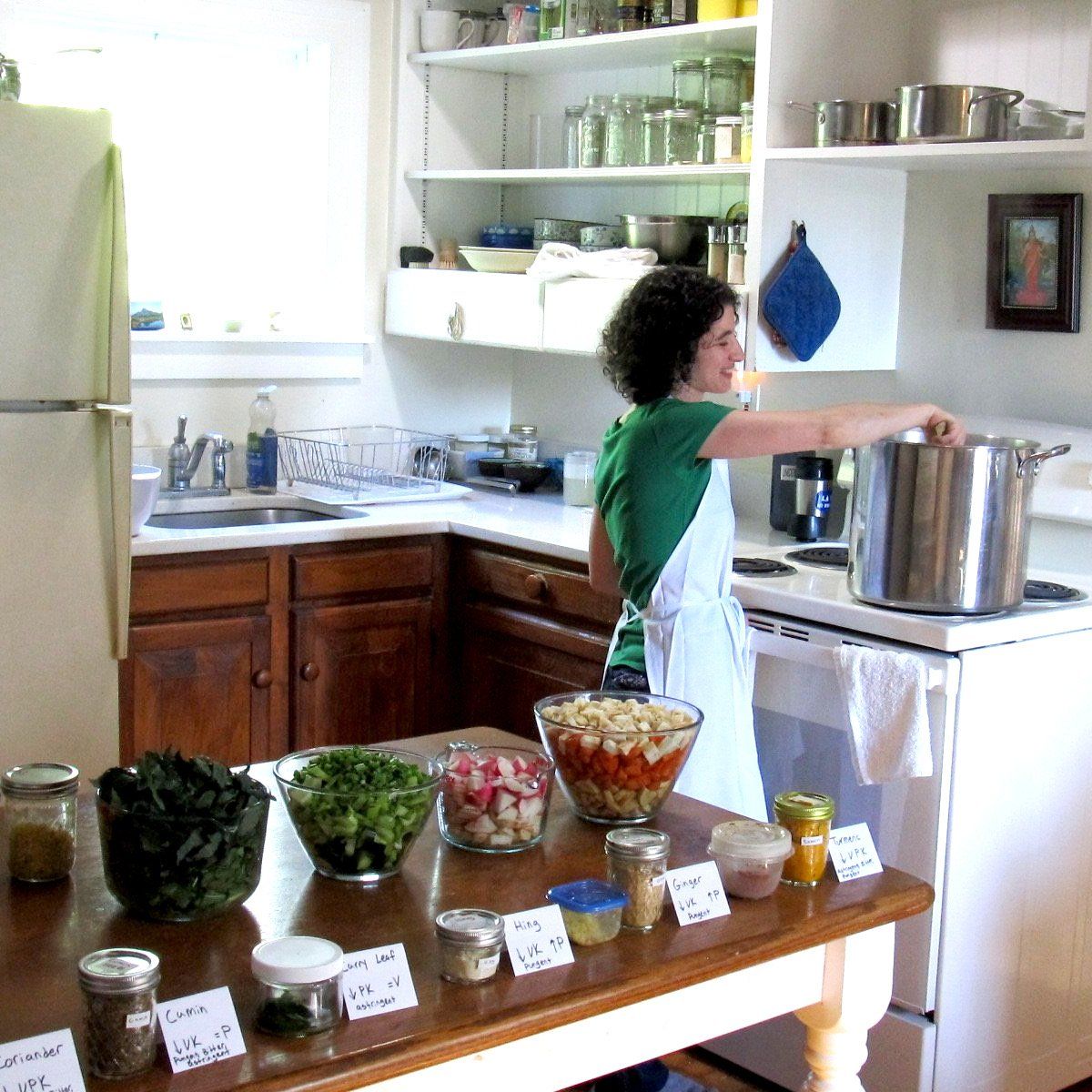
Quite often we have the medicine we need right in our own kitchen.
Spices, while giving wonderful flavor, can be used as a digestive aid, making the nutrients and elements of the food more available to us. When considering what herbs may be your medicine today, remember that like increases like, and opposites balance.
If you are experiencing symptoms of excess heat in the body, such as heartburn, inflammation, diarrhea, skin rashes, anger, or irritability, you would want to cool the body-mind-spirit with cooling herbs. If you are not digesting food well, and experiencing gas, bloating, or a heavy feeling after eating, that is a sign that your digestive fire is low or cold/damp. If opposites balance, in this case you would want some heating spices to help ignite your digestive fire.
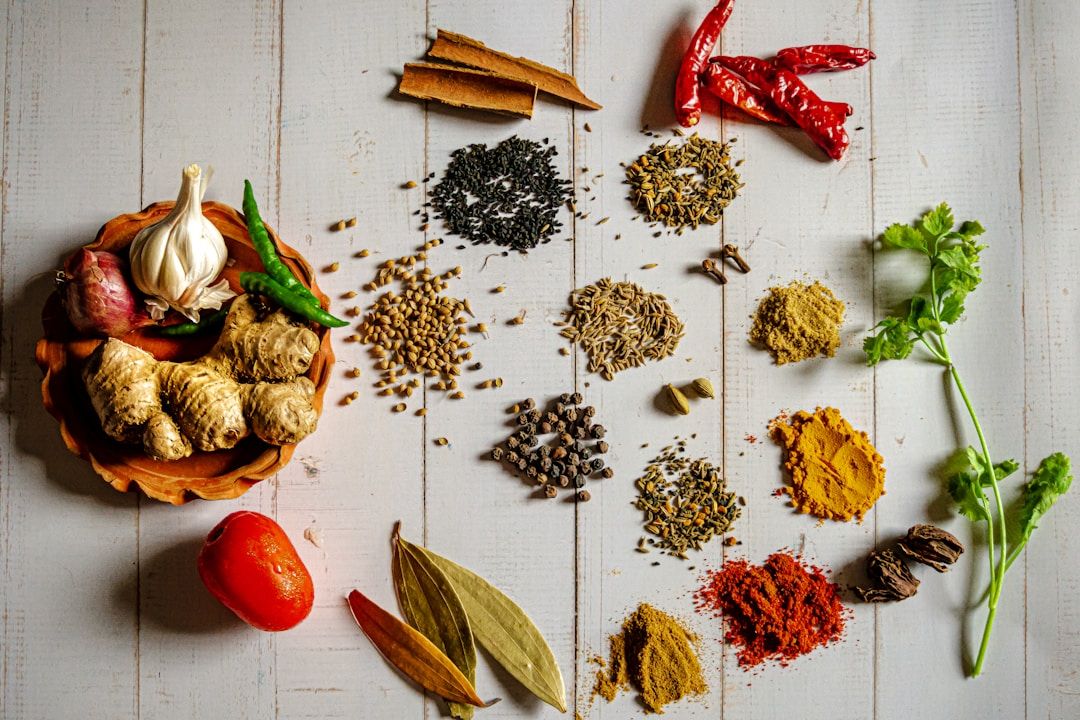
Herbs can be used to balance the qualities of the main foods you are preparing as well as each other. They can be added to meals or taken as a tea. A friend used to call me the great combiner, and when we would cook together, she always wanted me to be in charge of the spices. With a little guidance, and the willingness to listen to the messages of the microcosm (us) and the macrocosm (everything around us), our medicine becomes accessible and available from within our own kitchens.
Spices List
-
Turmeric
-
Ginger
-
Cumin
-
Coriander
-
Fennel
-
Black Pepper
-
Cardamom
-
Cinnamon
-
Nutmeg
-
Clove
Making The Medicine
-
Fennel seeds are great to keep around to sooth indigestion, such as heartburn or gas. Chew the seeds thoroughly before swallowing, a little at a time, until the symptoms are relieved.
-
Drinking tea made with whole cumin, coriander, and fennel seeds is a great digestive aid. It can also help relieve menstrual cramps or other muscle spasms. Mix equal parts of each seed, and combine one teaspoon of the seed mixture per cup of water, bring to a boil and simmer for 10 minutes.
-
Eggs are heavy and can be difficult for some bodies to digest. Adding a little turmeric and black pepper will help the body receive the eggs more effectively and with more ease.
-
Rice is cooling in nature, and can be difficult to digest on its own. Adding some warming spices like ginger or cumin creates a completely different experience for the body.
-
Beans on their own can cause gas and bloating, but cooked well with turmeric, black pepper, fennel, cumin, and coriander are delicious, and will digest more easily.
Continue Reading
Offerings
Guiding Principles
Quick Links
-
Patron
-
Newsletter
-
Resources
-
Contact
-
Patron
-
Newsletter
-
Resources
-
Contact
Turmeric (curcuma longa)
Cumin (cuminum cyminum)
Fennel (foeniculum vulgare)
Cardamom (elettaria cardamomum)
Nutmeg (myristica fragrans)
Ginger (zingiber officinale)
Coriander (coriandrum sativum)
Black Pepper (Piper nigrum)
Cinnamon (cinnamomum zeylanicum)
Clove (syzygium aromaticum)

Intentional Death Planning
Cardamom (elettaria cardamomum)
Pippali (indian long pepper, piper longum)
Andrographis (kalmgh,
andrographis paniculata)
Fennel (foeniculum vulgare)
Shatāvari (asparagus root,
asparagus racemosus)
Cinnamon (cinnamomum zeylanicum)
Due to the hot and pungent qualities, it is pacifying to vāta and kapha and should be used with awareness and in appropriate combination so as not to aggravate pitta. Cinnamon can act as an expectorant, making it useful in alleviating sinus or chest congestion and is often used to treat colds, coughs, and the flu acting to burn toxins within the body.
Lavender (lavandula angustifolia,
lavandula x intermedia)
Licorice (yashti madhu, glycerrhiza glarba)
Tulsi (holy basil, ocimum sanctum)
Oatstraw (avena sativa)
Rose (rosa centifolia)
Slippery Elm (ulmus ruba)
Brahmī (gotu kola, centella asiatica)
Chamomile (matricaria chamomilla)
Ashwagandha (winter cherry,
withania somnifera)
Guduchi (tinospora cordifolia)
Wild Yam (dioscorea villosa)
&
Vidari (alligator yam, ipomoea digitata)
Bala (country mallow, sida cordifolia)
Eucalyptus (eucalyptus globulus)
Amalaki (emblica officionalis)
Motherwort (heartwort, leonurus cardiaca)
Spearmint (mentha spicata)
Turmeric (curcuma longa)
Ginger (zingiber officinale)
Cumin (cuminum cyminum)
Coriander (coriandrum sativum)
Black Pepper (Piper nigrum)
Nutmeg (myristica fragrans)
Clove (syzygium aromaticum)
Ether
Air
Fire
Water
Earth
Summer
Spring
Autumn
Winter
Sweet Taste
Sour Taste
In excess, sour taste can lead to heart burn, ulcers, hot flashes, liver and gallbladder issues. Overuse of sour can create a critical, manipulative, and judgmental attitude, and cause the mind to be agitated and hyperactive.
Salty Taste
Pungent Taste
Bitter Taste
In excess, bitter taste can weaken the kidneys and the lungs, cause dry mouth, bone loss, and osteoporosis. It can also cause extreme dryness and constipation. Bitter foods deplete the bodily tissues, especially fat and reproductive tissue, which can lead to emaciation, malaise, and unsteadiness. Because air and ether are both cold and subtle elements, overuse can create a feeling of coldness in the body-mind-spirit, and lead to cynicism, loneliness, and agitation of the mind.
Astringent Taste
Ether
Air
Fire
Water
Earth
Vāta Doṣa
Use of oil, especially warming oils like sesame or olive oil, in addition to butter or ghee are good for vāta doṣa. Since digestion is often quite sensitive for folks with a strong vāta constitution, portion size is an important theme.
It is best to avoid underwhelming or overwhelming the digestive fire (agni). Frequent snacking, rather than full meals is especially disturbing to vāta. Hard, dry, rough, and crunchy foods, such as chips, crackers, and popcorn are best avoided, and can have a negative impact on elimination, mental state, and emotional balance. Additionally, warm, cooked foods will serve vāta well, especially in the fall and winter seasons or in cold and dry climates.
Pitta Doṣa
Due to its oily and hot qualities, avoiding fried food and excessive use of fermented vegetables is advised. For anyone experiencing excessive fire or inflammation, minimizing food in the pungent, salty, and sour category can be helpful, especially in the summer or hot and humid climates.
Pitta tends to overeat if eating off schedule, as their appetites can be voracious. The term "hangry" can often be associated with pitta folks who delay or skip meals. Sticking to regular meal times is great preventative care for pitta. Including some fruit or vegetables, especially cucumber, between meals can be supportive when actual hunger exists.
Kapha Doṣa
Cooling, heavy foods, especially dairy should be avoided unless properly prepared with pungent spices in small quantity. Kapha's plate should have a predominant quantity of vegetables, some protein, and a small amount of grain. Drier grains such as corn, millet, buckwheat, or barley are best.
Kapha does well with rough, cruciferous vegetables like cauliflower, broccoli, kale, raw salad greens, and sprouts. Heavy root veggies are not ideal. Lighter protein such as meat from smaller birds can be favored, while heavy, oily meat is better to avoid. Legumes, seeds, and less oily nuts are good vegetable protein for kapha. Incorporating pungent spices and food into the diet is beneficial for folks with a strong kapha constitution.
Like Increases Like &
Opposites Balance
For example, if you have a bowl of cold water and you add ice to it, the water will become even more cold. If you add hot water instead, the water will first become less cold, slowly cooling the more hot water that is added. Soon the water becomes warm, and if you keep adding hot water, it will eventually become hot, which may or may not be what you want.
The idea is that by slowly adding the hot water to the cold water, or in the case of Kitchen Medicine, incorporating foods with hot or warming qualities if excess cold is an issue, you can ease your way back into balance.
When we are able to identify an issue, we can use the lens of the elements, qualities, doshas, or tastes as medicine by incorporating food, herbs, and spices with the opposite qualities of the issue. This can be as simple as noticing that your skin is dry and incorporating more oily, unctuous, and moist foods into the diet, while minimizing dry, rough, and hard foods.
We can also use this simple concept as the healing foundation for chronic health issues such as acid reflux, nausea, migraines, osteoarthritis, or systemic inflammation, as well as during acute illness such as cold, flu, or upset stomach.
20 Basic Qualities
10 Pairs Of Opposites
-
Building Qualities
-
Lightening Qualities
-
Heavy
-
Light
-
Slow, Dull
-
Sharp, Penetrating
-
Cold
-
Hot
-
Oily, Unctuous
-
Dry
-
Smooth
-
Rough
-
Solid, Dense
-
Liquid
-
Soft
-
Hard
-
Static, Stable
-
Mobile, Unstable
-
Gross, Big
-
Subtle
-
Slimy, Cloudy, Sticky
-
Clear, Non-slimy
or maintain balance as needed.
These ten pairs of opposite qualities (gunas) are in relative relationship to each other and the larger context of the macrocosm. Nothing is absolute, and we consider the relationship between the individual subject and the outside circumstances. While the pairs express extremes on either end, balance is found somewhere in the middle.
Seasonal Medicine In The Kitchen
Simply put, when it's cold outside, eat warm, cooked food. When it's hot and humid, bring in some cooler and/or drier foods. If we live in a very windy place (air element and vāta dosha), food with heavy, grounding, and stable qualities (earth element and kapha dosha) might be good medicine. Some of this comes naturally based on what is growing, and most of us tend to feel more excited about soups and stews as we move into fall, and cooler, lighter food in the spring and summer.